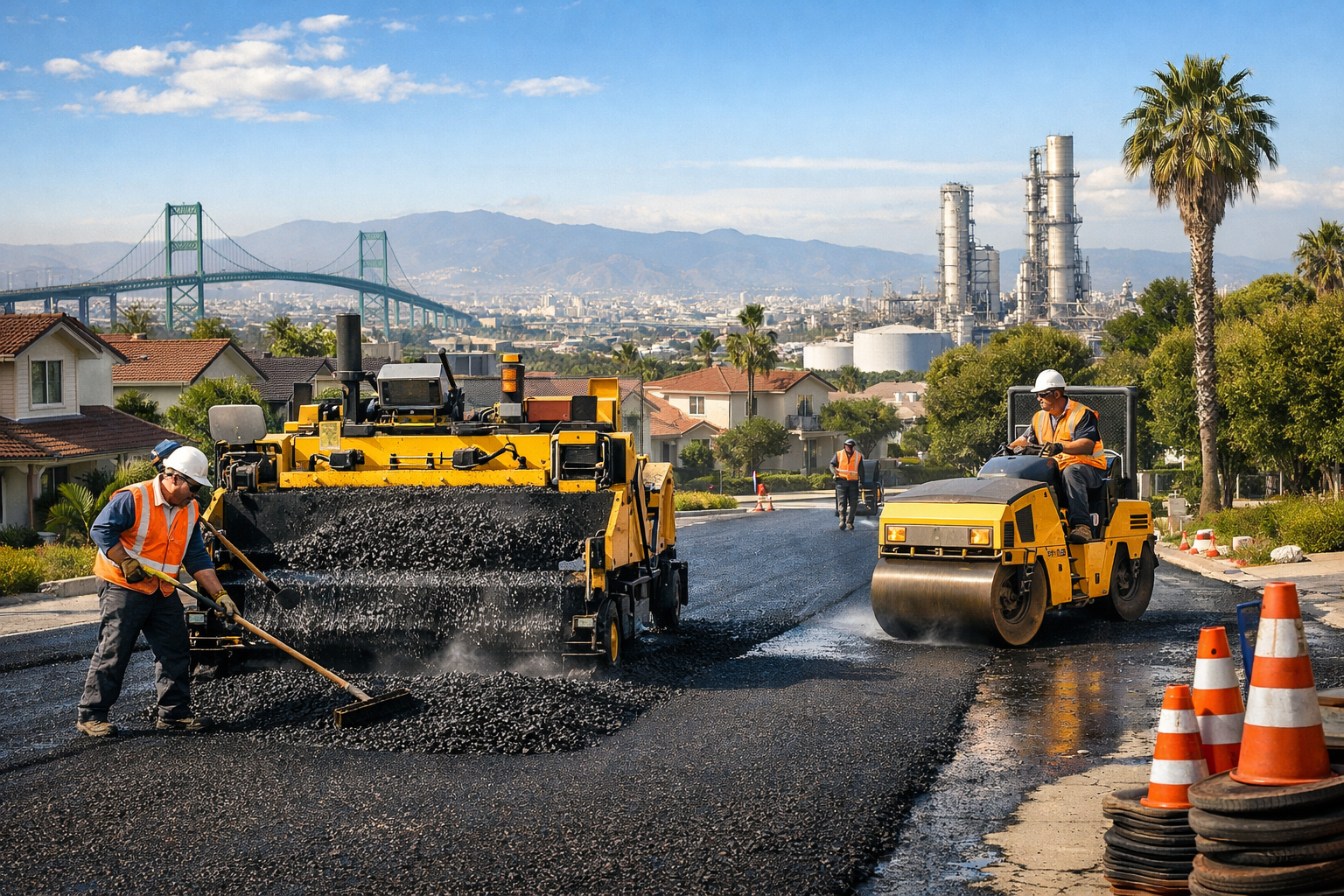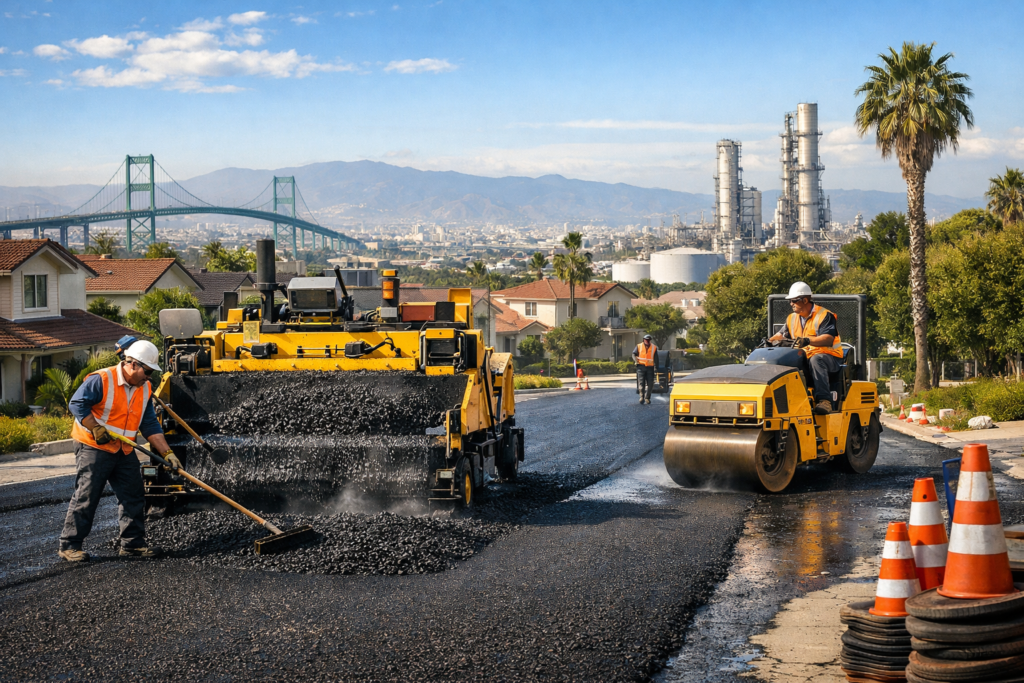
West Carson’s residential neighborhoods and commercial corridors depend on durable pavement that withstands the South Bay’s demanding conditions. Between intense summer heat that tests asphalt’s stability, occasional heavy rains that challenge drainage systems, and constant vehicle traffic that gradually wears surfaces, properties throughout this Los Angeles County community need paving solutions built to last. Whether you’re planning a new driveway installation, restoring a deteriorating parking lot, or addressing safety concerns from cracked pavement, understanding professional asphalt services helps you make informed decisions that protect your investment.
Quality asphalt work transcends simple aesthetics—it represents infrastructure investment affecting property safety, functionality, and long-term maintenance costs. Cracked, uneven pavement creates liability exposure through trip hazards and vehicle damage potential. Deferred maintenance compounds problems exponentially, turning manageable repairs into expensive reconstruction projects. Professional asphalt contractors deliver the expertise, equipment, and materials necessary for installations that perform reliably for decades rather than failing prematurely and requiring costly replacement.
Why Asphalt Remains the Premier Paving Choice
Asphalt’s dominance in residential and commercial paving stems from its unique combination of performance characteristics. This flexible pavement material accommodates ground movement and thermal expansion without the cracking issues that plague rigid concrete. The smooth surface provides excellent traction for vehicles while creating wheelchair-accessible pathways meeting ADA requirements. Installation speed allows projects to complete quickly, minimizing disruption to property access and daily operations.
Cost-effectiveness makes asphalt particularly attractive for budget-conscious property owners. Material and installation expenses typically run 30-50% less than comparable concrete work. Maintenance procedures remain straightforward and affordable—sealcoating, crack filling, and patching can be performed without specialized skills or expensive equipment. When eventual replacement becomes necessary, asphalt recycles completely, reducing disposal costs while supporting environmental sustainability.
Southern California’s climate creates specific considerations for asphalt performance. Extended periods of intense sunlight accelerate oxidation—the chemical breakdown of asphalt binder that causes surfaces to become brittle and crack. High temperatures during summer months soften asphalt, making it vulnerable to deformation from heavy loads or vehicles making sharp turns. Professional installations account for these regional challenges through proper material selection, adequate thickness specifications, and quality workmanship that ensures long-term durability.
Comprehensive Asphalt Services for Every Need
New installation projects transform properties through functional pavement where none existed previously. The process begins with careful site evaluation determining appropriate grades for drainage, identifying underground utilities requiring protection, and assessing soil conditions affecting base requirements. Excavation removes unsuitable material and establishes proper depths. Base installation creates stable foundations preventing future settling. Finally, asphalt placement and compaction delivers smooth, durable surfaces ready for decades of service.
Resurfacing breathes new life into structurally sound pavement showing surface deterioration. Also called overlay, this process involves placing fresh asphalt over existing surfaces after thorough preparation including crack repair, cleaning, and application of tack coat ensuring proper bonding between layers. Resurfacing costs substantially less than complete reconstruction while extending pavement life 10-15 years, making it an economically attractive option when underlying structure remains intact.
Repair services address localized failures before they spread and compromise larger pavement areas. Pothole repair removes damaged material, prepares exposed base, and installs new asphalt compacted to match surrounding surfaces. Crack filling prevents water infiltration that causes base deterioration and freeze-thaw damage. Edge repairs restore pavement boundaries damaged by erosion, traffic, or inadequate initial construction. Timely repairs prevent minor problems from becoming major expenses.
Sealcoating protects asphalt investment through application of protective coatings that shield surfaces from oxidation, water penetration, and chemical spills. This maintenance treatment restores rich black appearance while filling small surface voids and creating smooth, easily cleaned surfaces. Applied every 2-3 years, sealcoating dramatically extends pavement life at minimal cost compared to reconstruction expenses when protection is neglected.
Recognizing When Professional Help Is Needed
Surface deterioration manifests in various forms indicating different underlying problems. Alligator cracking—interconnected cracks creating patterns resembling reptile skin—signals structural failure requiring excavation and reconstruction rather than simple surface treatments. Longitudinal cracks running parallel to pavement direction may indicate thermal stress, poor joint construction, or base settlement. Transverse cracks crossing perpendicular to traffic flow often result from thermal cycling or reflective cracking from underlying joints.
Potholes represent advanced pavement failure where water has penetrated through cracks, weakened base materials, and allowed surface disintegration under traffic loads. Beyond being unsightly, potholes create serious liability risks through vehicle damage potential and pedestrian trip hazards. Temporary cold-patch fixes provide short-term solutions, but permanent repair requires addressing why potholes formed—typically inadequate drainage or base failure.
Drainage problems appear through standing water after rain events, premature ice formation in shaded areas, or water staining on pavement surfaces. Poor drainage accelerates deterioration by saturating base materials, creating conditions for freeze-thaw damage, and washing away base support. Professional contractors evaluate drainage patterns, identify problem sources, and implement solutions ranging from simple regrading to comprehensive drainage system installation.
Raveling occurs when asphalt binder deteriorates, allowing aggregate to separate from the surface. This creates progressively rougher textures as more stones dislodge under traffic. Raveling indicates oxidation from age and UV exposure, poor initial mix design, or inadequate compaction during installation. Early-stage raveling responds to sealcoating while advanced cases require overlay or reconstruction.
The Professional Installation Process Explained
Quality asphalt projects begin with thorough site evaluation assessing existing conditions, drainage patterns, soil characteristics, and access constraints. This analysis informs design decisions ensuring installations meet functional requirements while addressing site-specific challenges. Skipping this evaluation step leads to generic approaches that fail to address property-specific conditions affecting long-term performance.
Excavation establishes proper depths accommodating required base and asphalt thicknesses while maintaining grades that direct water away from buildings toward drainage points. Equipment operators work to precise elevations using laser guidance or GPS systems ensuring consistent depths throughout project areas. Proper excavation also involves protecting underground utilities, removing unsuitable soils, and creating stable platforms for subsequent construction.
Base preparation determines pavement longevity more than any other single factor. This critical step involves placing crushed aggregate in controlled lifts, compacting each layer to specified density before adding subsequent lifts. Proper compaction creates stable platforms preventing future settling that causes asphalt cracking and structural failure. Professional contractors use vibratory plate compactors or rollers appropriate to project scale, testing compaction to verify specifications are achieved.
Asphalt installation requires precise timing and temperature control. Material must arrive at proper temperature—typically 275-300°F—allowing adequate working time for spreading and compaction before cooling prevents proper densification. Paving crews spread asphalt to uniform thickness using mechanical pavers for large areas or hand tools for smaller spaces. Compaction follows immediately using rollers that densify material while still workable, creating smooth surfaces with proper density for long-term durability.
Why West Carson Properties Benefit from Local Expertise
West Carson’s location within Los Angeles County creates specific considerations for asphalt work. Local soil conditions—ranging from clay to sandy compositions—affect base requirements and drainage design. Proximity to coastal areas influences material selection and protection strategies. Municipal regulations governing permits, inspections, and specifications require contractors familiar with local requirements for efficient project execution.
An experienced Asphalt contractor West Carson brings knowledge developed through years serving this specific community. They understand which material suppliers provide quality products suited to regional conditions. They maintain relationships with local building departments streamlining permit processes. Their previous work throughout the area provides visible evidence of quality and longevity that references can confirm.
Local contractors maintain reputations within communities where they operate. Their completed projects remain on display as ongoing advertisements—for quality when work is done properly, or as cautionary examples when it’s not. This accountability incentivizes workmanship standards that distant contractors or national chains don’t face. Satisfied local customers provide reliable references easily verified before making contractor commitments.
Established local presence means contractors will be available for future maintenance, warranty service, or additional projects. Fly-by-night operators disappear after collecting payment, leaving property owners with no recourse when problems emerge. Local businesses with years of community presence demonstrate stability and commitment that protects your investment beyond initial installation.
Investment Considerations and Long-Term Value
Asphalt installation costs reflect multiple variables including project size, site conditions, base requirements, asphalt thickness, and current material prices which fluctuate with petroleum markets. Residential driveways typically range $3-7 per square foot for complete professional installation including proper base preparation. Commercial parking lots may cost $2-5 per square foot depending on specifications and economies of scale on larger projects.
Maintenance expenses over pavement’s service life significantly impact total ownership costs. Sealcoating every 2-3 years costs approximately $0.15-0.25 per square foot but extends pavement life substantially by preventing oxidation and water damage. Crack filling performed proactively costs far less than repairing water damage after infiltration occurs. Strategic maintenance investments prevent expensive reconstruction, making regular upkeep financially prudent.
Quality installations provide superior long-term value through extended service life and reduced maintenance requirements. Professional work typically delivers 20-30 years of performance with proper maintenance, while substandard installations may fail within 5-10 years regardless of maintenance efforts. The incremental cost difference between quality and cheap work proves negligible compared to performance differences over decades of service.
Property value impacts justify asphalt investments for many owners. Quality pavement dramatically enhances curb appeal, creating positive first impressions for potential buyers or customers. Functional parking areas support commercial operations and customer experiences. For residential properties, driveway and pathway condition significantly influences property values and buyer interest during sale processes.
Maintenance Practices That Maximize Pavement Life
Sealcoating represents the single most effective maintenance practice for extending asphalt longevity. This protective treatment shields surfaces from oxidation caused by UV exposure, prevents water infiltration through small cracks, and protects against chemical damage from automotive fluids. Applied every 2-3 years after initial curing, sealcoating maintains asphalt flexibility while restoring rich black appearance that enhances property aesthetics.
Crack sealing prevents minor surface cracks from becoming major structural problems. Small cracks allow water infiltration that saturates base materials, leading to freeze-thaw damage and eventual pothole formation. Addressing cracks while they’re narrow and shallow costs minimal amounts compared to repairing extensive damage after water penetration compromises pavement structure. Annual inspections identify new cracks requiring attention before they expand.
Drainage maintenance ensures water flows away from pavement rather than ponding or infiltrating. Keep catch basins and drainage structures clear of debris. Maintain positive slopes directing water toward drainage points. Address any settling creating low spots where water accumulates. Water represents asphalt’s greatest enemy—proper drainage prevents most premature pavement failures.
Surface cleaning removes debris, leaves, and automotive fluids that can degrade asphalt over time. Regular sweeping prevents organic material accumulation that retains moisture against pavement surfaces. Clean oil and fuel spills promptly—petroleum products dissolve asphalt binder, creating soft spots that deteriorate rapidly under traffic.
Environmental Stewardship Through Sustainable Practices
Asphalt recycling makes this material among the most recycled in America. Reclaimed asphalt pavement (RAP) gets crushed, sized, and incorporated into new asphalt mixes or used as base material. This recycling conserves virgin aggregate, reduces energy consumption in production, and diverts waste from landfills. Many professional contractors incorporate recycled content routinely, delivering environmental benefits without compromising performance or increasing costs.
Permeable asphalt addresses stormwater management by allowing water to infiltrate through pavement into underlying stone reservoirs. These systems reduce runoff volumes, filter pollutants before they reach waterways, and help recharge groundwater supplies. While not appropriate for all applications, permeable asphalt provides environmental benefits for parking lots, walkways, and other suitable locations.
Cool pavement technologies using light-colored aggregates or reflective binders reduce urban heat island effects by reflecting more solar radiation than traditional dark asphalt. These surfaces remain cooler, reducing air conditioning demands in adjacent buildings and improving pedestrian comfort. Southern California’s climate makes heat island mitigation particularly valuable for community wellbeing and energy conservation.
Local sourcing reduces transportation distances for materials, decreasing fuel consumption and associated emissions. Professional contractors typically source aggregates and asphalt from regional suppliers, minimizing environmental impacts while supporting local economies. This practice demonstrates environmental responsibility beyond simple material recycling.
Choosing the Right Asphalt Professional
Licensing verification provides essential contractor evaluation. California requires contractors performing work valued over $500 to hold appropriate licenses from the Contractors State License Board. Verify active license status and check for disciplinary actions or complaints. This basic check eliminates unlicensed operators before investing time in further evaluation.
Insurance coverage protects property owners from liability for accidents occurring during construction. Verify contractors carry general liability insurance covering property damage and bodily injury. Workers compensation insurance protects you from liability for worker injuries on your property. Request certificates of insurance and verify coverage directly with insurance companies—fraudulent certificates appear occasionally.
References from past clients provide insights no marketing materials can match. Request contacts for projects similar to yours completed within the past 2-3 years. Actually follow up with these references, asking about their experiences, any problems encountered, how issues were resolved, and whether they’d hire the contractor again. Multiple positive references indicate consistent quality and professionalism.
Written proposals should specify all project details including excavation depth, base material type and thickness, asphalt type and thickness, edge treatments, drainage provisions, and timeline. Vague estimates hide assumptions creating dispute opportunities when expectations don’t match deliveries. Detailed specifications protect both parties by establishing clear expectations before work begins.
Your West Carson property deserves asphalt work executed with the expertise and attention to detail that ensures decades of reliable performance while enhancing property value and functionality.
Frequently Asked Questions
How soon can I drive on newly installed asphalt? New asphalt typically supports light vehicle traffic within 24-48 hours after installation, though full curing takes 6-12 months. During initial months, avoid heavy loads, sharp turns, and parking in identical spots repeatedly as pavement remains more susceptible to marking and deformation.
What’s better for driveways: asphalt or concrete? Both materials perform well when properly installed. Asphalt costs less initially, repairs more easily, and handles temperature fluctuations better in most climates. Concrete offers longer lifespan and requires less maintenance but costs more upfront and repairs less seamlessly. For most West Carson residential applications, asphalt provides excellent value.
Why does asphalt turn gray over time? Gray coloration results from oxidation—ultraviolet radiation from sunlight breaks down asphalt binder at the surface. This process is normal and doesn’t necessarily indicate problems, though it does signal that sealcoating would provide protection and restore darker appearance.
Can tree roots damage asphalt driveways? Yes, growing tree roots can lift and crack asphalt as they expand. Roots from large trees planted too close to pavement eventually cause damage requiring repairs. When planning new driveways, maintain adequate distance from large trees, or consider root barriers during installation to protect long-term pavement integrity.
How thick should residential asphalt be? Residential driveways typically require 2-3 inches of asphalt over properly prepared aggregate base—usually 4-6 inches of compacted crushed stone. Total pavement structure depth depends on soil conditions and intended use, with heavier vehicles or poor soils requiring thicker sections for adequate support.